Laboratory Testing Rock
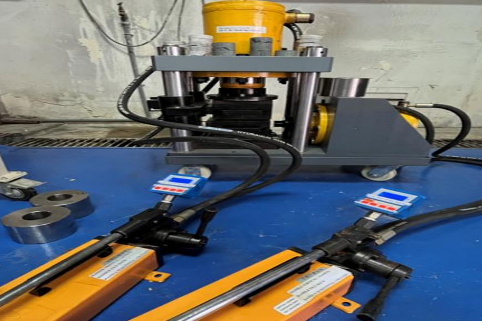
- Rock Direct Shear Test
This equipment is used in a geotechnical laboratory to determine the shear strength of rock or rock discontinuities.
Function: To apply a normal load and shear load to a rock sample to determine the shear force required to cause failure along a predetermined shear plane.
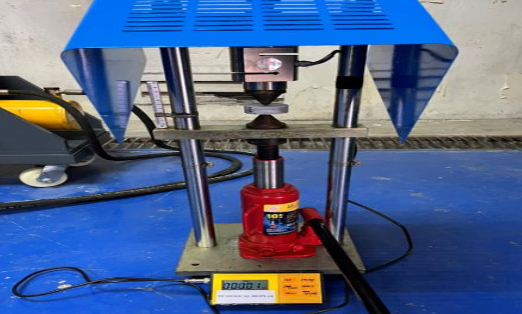
- Point Load Test (PLT)
This instrument is an index test used in geotechnical engineering to quickly assess the strength of rock samples.
Function: To apply a concentrated load to a rock specimen and measuring the resulting failure load, providing an index of rock strength.
- Soil Particle Sieve Analysis
Also known as a gradation test, this method determines the distribution of particle sizes within a soil sample by separating it into different size fractions using a series of sieves with varying mesh sizes.
Function: To evaluate soil gradation and classify soil based on particle size distribution for engineering and geological applications.
- Soil Hydrometer
This instrument is used in soil mechanics to determine the particle size distribution of fine grained soils that cannot be effectively analyzed by sieve analysis. It relies on the principle of sedimentation, measuring how quickly soil particles settle in a water suspension.
Function: To determine the proportion of different particle sizes in fine-grained soils for classification and engineering analysis.
- Protimeter
This instrument measures moisture content using electrical resistance or capacitance.
Function: To measure moisture content in concrete structures to assess dampness, potential leakage, and suitability of surfaces for coating, finishing, or further construction works.
- PH and Chlorine Test
This instrument set measures acidity/alkalinity (pH) and chlorine concentration in water to assess its chemical condition.
Function: To assess water quality and to identify potential effects of chlorine or acidic content in water.